Rachel Feltman: For Scientific American’s Science Rapidly, I’m Rachel Feltman. At this time we’re taking a break from science reality to speak about some current science fiction. My visitor is journalist, editor and creator Annalee Newitz. You might know a few of their nonfiction titles like 4 Misplaced Cities: A Secret Historical past of the City Age, Tales Are Weapons: Psychological Warfare and the American Thoughts and Scatter, Adapt, and Bear in mind: How People Will Survive a Mass Extinction. However their journalistic analysis on science and expertise has additionally fueled fashionable fiction titles like The Way forward for One other Timeline and, one among my private favorites, Computerized Noodle. It takes place in a post-war San Franscisco and contains a bunch of robots beginning their very own noodle restaurant. It’s actually great, you must test it out.
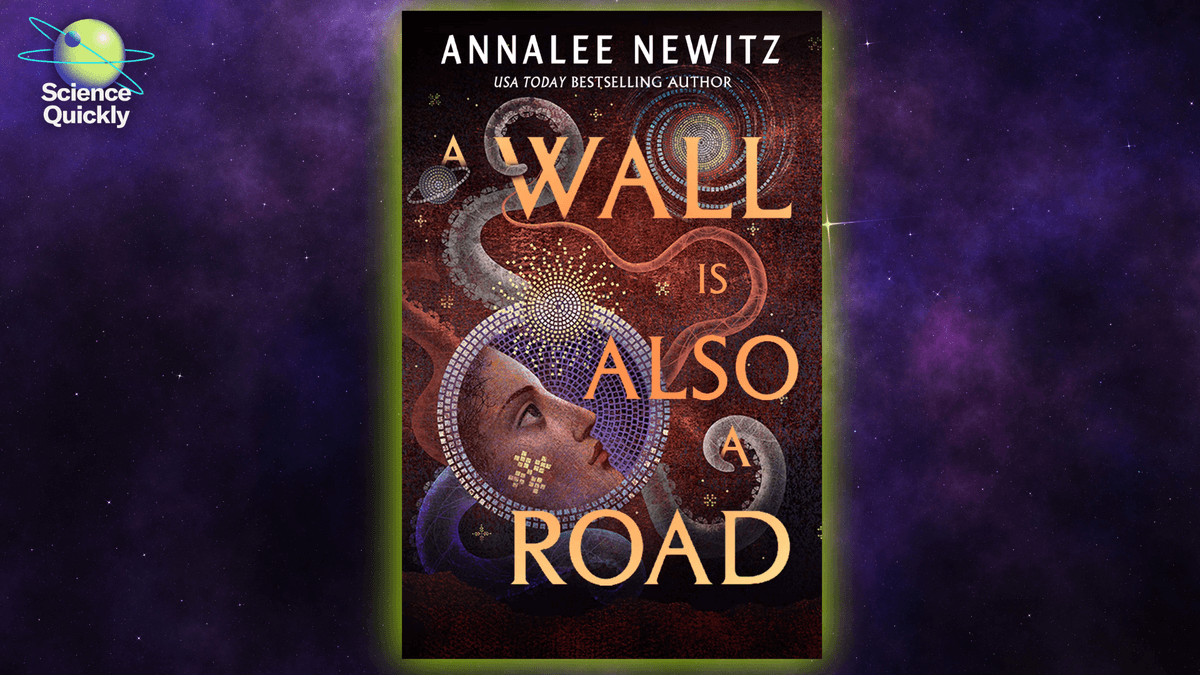
Anyway, Annalee is right here in the present day to speak about their newest guide, A Wall Is Additionally a Highway. It’s a genre-bending odyssey that includes sentient slime molds, historic Roman intercourse staff and extraterrestrial teachers who show that, irrespective of how alien your physiology could also be, the stress of engaged on a dissertation is totally common.
Annalee, thanks a lot for approaching to talk with us in the present day
On supporting science journalism
In the event you’re having fun with this text, think about supporting our award-winning journalism by subscribing. By buying a subscription you’re serving to to make sure the way forward for impactful tales in regards to the discoveries and concepts shaping our world in the present day.
Annalee Newitz: Yeah, thanks for having me.
Feltman: So I wanna speak about your newest guide. I’m actually, actually having fun with it. I feel it pulls lots out of your background as a science author who’s written numerous nonfiction. So I’d love to simply begin with how this concept first began.
Newitz: So that is 100% me cribbing off my very own nonfiction work. I revealed a guide a few years in the past known as 4 Misplaced Cities, which offers, partially, with Pompeii and the way it was that town was buried in ash, clearly, but additionally how folks survived—as a result of, in truth, one of many issues that I feel isn’t mentioned fairly often is the truth that most people within the metropolis had been in a position to evacuate. There have been, in fact, many, many tragedies, and lots of people did die. But it surely’s really a extremely nice instance of what now we’d think about to be, like, a contemporary rescue operation.
And other people resettled all through the area, and I had spent an infinite period of time fascinated by Pompeii. I visited town. I visited Herculaneum. I frolicked with numerous archaeologists—to the purpose the place I’m positive I could have overstayed my welcome at their digs. And I saved fascinated by the abnormal individuals who had lived at Pompeii, like, not the flowery those who we at all times hear about however simply individuals who survived, who simply did it by actually strolling out of town.
Feltman: Hmm.
Newitz: And one among them is that this lady, Murtis. We don’t know if she survived, however she did go away her identify on the wall on the lupanar, the purpose-built brothel within the metropolis. And there’s this actually terrific scholar, Sarah Levin-Richardson, on the College of Washington, who’s written lots in regards to the lupanar and likewise the lives of intercourse staff.
And so she wrote this nice article about Murtis and the graffiti that she left behind praising her personal expertise as a cocksucker, and why it was that we, sort of, know that girls had been leaving this graffiti. It wasn’t simply, like, males saying issues. And I saved questioning about Murtis. She appeared like somebody that I’d meet right here in San Francisco who can be sort of sarcastically speaking about how horny she was. So I couldn’t let her go, and I lastly was like, “All proper. I want her to be one of many fundamental characters in a novel.” And I introduced her to life on this guide, together with among the different ladies who we all know lived in Pompeii, like Julia Felix, who owned an enormous procuring and tub advanced, in addition to a boarding home.
There’s another ladies—like, Eumachia makes an look, for these of you who’ve the deep lower of figuring out who that’s. She’s one other wealthy girl who left her identify on numerous buildings. And I’m a science-fiction author, so it made excellent sense to me that the way in which we’d meet Murtis can be a graduate pupil who’s an alien slime mould who’s doing their fieldwork there in Rome.
And, really, they don’t intend to be learning people in any respect. They’re on Earth to review the ecosystem. They’re in search of single-celled organisms as a result of they’re a single-celled organism. And so after they discover people, they’re sort of like, “What the heck is that this?” [Laughs.]
Feltman: Yeah. May you inform listeners who aren’t conversant in slime molds a bit bit about why they’re so cool and fascinating to us?
Newitz: Wow. Okay. Effectively, so slime molds are sort of the charismatic microfauna, perhaps, of the universe as we all know it. So that they’re not a fungus; they’re not a plant; they’re not an animal. They’re a protist, that means, you understand, they’re, like, sort of like amoebas. They’re extra carefully associated to amoebas than, like, a fungus, despite the fact that we consider slimes and funguses as being sort of the identical factor.
And a few slime molds, they exhibit numerous the hallmarks of sentience. They will clear up puzzles. You realize, when you put them in a maze, and you place meals outdoors the maze, they really will clear up the maze to get to the meals.
Feltman: Proper. I do know there’s been some analysis , like, utilizing them to seek out probably the most environment friendly path or a structure for a community as a result of they’re so good at discovering meals in mazes.
Newitz: Yeah. There was a paper about how slime molds might have solved the touring salesman drawback. And so they even have these fascinating life cycles the place they go from being single-celled organisms to multicellular and again once more generally. They’re a life-form that we barely perceive. They’re very numerous, very lovely but additionally generally tremendous gross-looking to people. I imply, I feel they’re all very lovely, however, you understand, they’re slimy, particularly after they group collectively in, in giant portions. So I feel that what’s thrilling about them actually is the truth that they appear to have these hallmarks of consciousness, despite the fact that they’re so totally different from us.
Feltman: Yeah, so one of many issues about your guide that I feel is such a delight and going to please lovers of science fiction is that you just clearly did a lot work to have this character that’s so alien, from a human perspective, be the standpoint character and see Earth and people as alien, as we’d see this character. I’d love so that you can simply discuss a bit bit about what that course of was like and what made you resolve to have a personality who was such an fascinating particular person and so not a human being.
Newitz: I imply, the factor that’s enjoyable about this character, whose identify is Gardenpath, is that they’re bodily very totally different from us. They’re a single-celled organism. They’re primarily based on a slime mould, and I did discuss to a slime mould biologist to, you understand, get some evidence-based, uh, descriptions of slime molds. They’re very alien, however on the identical time, they’re in grad faculty, and their grad faculty system, on this floating college outdoors of our galaxy, is kind of recognizable. And so I feel one of many issues that’s enjoyable about it’s that when you’ve in any respect been in academia or examine academia, you’ll acknowledge the sort of social construction.
However on the identical time, we’ve these college students who, you understand, they don’t have ears or mouths as we all know them, so in the event that they wanna talk, they’re doing it utilizing mobile signaling, which I feel I’ve at all times been fascinated by that mechanism, how our cells and our our bodies discuss to one another mainly utilizing chemical substances and hormones and ions. You realize, utilizing communication that’s very, very totally different from ours, and in order that’s what these guys are doing, and so they have receptors all around the surfaces of their membranes, and so they use these to speak feelings, phrases, philosophies. They will attain within one another to speak, which, once more, is, isn’t completely not like how a slime mould would possibly talk with one other slime.
One of many issues, once more, that I really like about slime molds—as a result of who doesn’t love slime molds?—is that of their life cycles, a lot of them go from being a single-celled organism to becoming a member of up with different single cells to develop into, generally they’re known as slugs. They, sort of, develop into multicellular, generally to breed however generally simply to stroll round and discover meals.
And so my guys do this. Like, that’s their sleep cycle, is that in intervals when they should detox, mainly, they merge collectively. And for me, it’s simply actually gratifying after spending many, a few years writing about biology and writing about this stuff from a really human perspective. I simply wished to know, like, how would the cells be feeling about mobile communication, and what wouldn’t it be wish to be any person who spent a part of your life as a person and a part of your life merged into a bigger entity?
These are the sorts of questions that animate me you understand I, as a journalist, in fact, I try to be as factual as attainable, however then my head nonetheless fills with all these ideas like, “What if each cell in our our bodies is definitely, like, an entity that’s a person?” Or like, “What if slime molds even have a complicated civilization?” You realize, in all probability they don’t, however perhaps they do. And in order that, that is what I think about they might be like.
Feltman: So clearly, you discuss to scientists on a regular basis in your work, and that knowledgeable numerous this. However I, I noticed in your acknowledgments that you just ran this by a number of consultants, and that, that obtained me curious. You realize, how did you stability, type of, pulling from precise biology versus letting issues go and placing your personal spin on them for the sake of the plot and the story?
Newitz: That’s a extremely good query, and I feel, for me as a author, I like having laborious limits on my creativeness. I’m a type of individuals who hates, like, holodeck episodes on Star Trek as a result of something can occur. So what I are likely to do is use the science as a lot as attainable as a guardrail.
Feltman: Hmm.
Newitz: And so, as an example, the slime mould characters who name themselves the rational folks, they dwell within the circumgalactic medium, which is a gasoline cloud that surrounds our galaxy. And I interviewed Molly Peeples, who’s a cosmologist who research the circumgalactic medium, and we talked lots about, like, the density of gasoline, the temperatures, what sorts of assets can be on the market. Like, would there be water? Would there be metals? And it seems, like, there’s planets and stars so that they obtained entire little micro galaxies on the market.
So to me, that offered a extremely nice world to place my characters [in] as a result of they really have assets on the market. However on the identical time, you understand, there’s numerous stuff they don’t have: for instance, intense gravity wells, like, all the radiation that we take care of on a regular basis contained in the galactic aircraft.
So I suppose, like, the reply to that query is: I attempt to be as correct as attainable, however then the factor about science is: there’s all of those areas which are, sort of, the darkish matter of what we all know, you understand? There’s simply stuff we don’t know, and in order that’s the place I get to return in and say, like, “Effectively, that is what it is likely to be wish to dwell on the market,” or, “If a mobile slime mould had been aware, that is sort of how it will really feel.” That’s all of the stuff we’re not allowed to do as science journalists, and so it’s actually enjoyable to sort of break the principles and, and fill in all these gaps with my very own concepts.
Feltman: Positively. What are a few of your favourite facets of, you understand, this kind of life and tradition that you just created for the guide?
Newitz: Effectively, I favored having the mix of this very alien civilization assembly Roman civilization as a result of I really feel like, as somebody who writes lots about archaeology, that I usually do really feel like an alien after I’m writing a couple of civilization that’s, like, 2,000 years outdated and has these recognizable parts but additionally so many cultural assumptions which are misplaced or very, very totally different from ours.
Feltman: Hmm.
Newitz: And so I favored the thought of, sort of, exhibiting that to the reader and welcoming readers to do not forget that human civilizations will also be so radically not like ours in the present day that we’d as nicely strategy them like aliens. And one factor that I speculated was that Murtis, our character who lives in Pompeii, wouldn’t actually be fazed by the thought of assembly an alien as a result of, at the moment in historical past, you understand, we hadn’t but found out what the celebrities had been actually. We hadn’t found out all the pieces that was on Earth. And so Gardenpath ultimately is like, “Yeah, I’m sort of from past the celebrities, and I’m right here learning.” And Murtis thinks it’s weirder {that a} lady is a scholar than that there’s a girl from past the celebrities visiting Pompeii, and he or she’s like, “Oh, nicely, are there Romans the place you come from?” Like, as a result of she lives in a world the place Romans have sort of invaded all the pieces.
Feltman: Hmm.
Newitz: And so I favored, you understand, placing that stuff collectively and saying, like, “Effectively, really, perhaps in historic Rome, you understand, aliens would have appeared extra abnormal than they might now.”
Feltman: Proper. Is it crazier than any person who’s by no means heard of Rome? Like, any person coming from the opposite facet of the planet is as wild as any person coming from the celebrities whenever you haven’t studied astrophysics, so….
Newitz: And whenever you couldn’t probably have as a result of no one had been in a position to determine that stuff out at that stage but, you understand? And naturally, in Pompeii, it was such a cosmopolitan metropolis that they might’ve had folks from in all places. Individuals had been coming from Africa, folks had been coming from Asia Minor, the Levant, like, Europe. So, you understand, an alien is like, “No matter.” That’s simply, “Okay, you’re from past the celebrities—nice,” you understand?
Feltman: Yeah. Why do you assume it’s vital for us to consider the thought of a consciousness that could possibly be so totally different from ours and life that’s so totally different from what feels regular to us?
Newitz: I actually assume it’s vital to query what we consider as regular or typical, and that is an concept that science and the scientific mission have at all times taken actually critically. I imply, the factor that’s great about science is that when it’s practiced in its most pure kind, it’s about asking each attainable query you’ll be able to about all the pieces round you and never taking something with no consideration and never assuming that what appears regular now is definitely what’s regular in every single place.
And so there’s one thing actually lovely about getting an opportunity to consider: What would a really totally different sort of consciousness be like? You realize, what wouldn’t it imply to acknowledge types of pondering, types of cognition, that don’t match with what we’ve skilled as folks, uh, on Earth or as people on Earth, actually, is what I ought to say.
There’s at all times a, sort of, sneaky undercurrent in my work as a result of I write lots about nonhuman consciousness, uh, in my fiction. And it’s, it’s actually about attempting to strategy one another with extra curiosity and extra openness and to essentially strategy, you understand, different people and assume, “Oh, uh, despite the fact that they appear so totally different, perhaps we’ve one thing in frequent, or perhaps there’s simply one thing lovely or fascinating about how totally different this particular person is from me.”
Or a nonhuman animal. We’re studying extra on a regular basis about how a lot tradition that nonhuman animals appear to have—you understand, whales, elephants. I used to be simply on a fantastic web site that has recordings of elephant communication, and there’s dozens and dozens of those vocalizations, I suppose. However they’re communication, like, elephants are speaking to one another, determining who’s gonna lead the pack in the present day or the place they’re gonna go.
And so for me, if I can invite readers to empathize with a slime mould, I actually hope they’ll take that again out into the actual world and perhaps empathize with elephants or with simply human beings who appear actually totally different.
Feltman: Completely. I preserve fascinated by the side of the, the slime mould characters the place their assigned dorm mates that they must be glopped right into a bowl with in order that they’ll dissolve their membranes and all hang around collectively and the way like, wow, that’s, that’s life, isn’t it? That individuals want one another, and generally you may not like somebody, however the reality is: you gotta get glopped into the bowl with them. It’s gotta occur.
Newitz: You’re gonna have roommates, dangerous roommates, even when you dwell past the galaxy generally. [Laughs.] It’s a common expertise.
Feltman: Effectively, thanks a lot for approaching to speak in regards to the guide. This has been nice.
Newitz: Yeah. Thanks a lot for having me.
Feltman: That’s all for in the present day’s episode. We’ll be again on Friday for an interesting dialog in regards to the human thoughts’s capability for uncertainty—and how one can enhance your personal mind’s capability to deal with chaos.
Science Rapidly is produced by me, Rachel Feltman, together with Fonda Mwangi, Sushmita Pathak, Allison Rodgers and Jeff DelViscio. This episode was edited by Alex Sugiura. Marielle Issa and Aaron Shattuck fact-check our present. Our theme music was composed by Dominic Smith. Subscribe to Scientific American for extra up-to-date and in-depth science information.
For Scientific American, that is Rachel Feltman. See you subsequent time!